

Fisetin bijwerkingen: 200mg safety & drug interactions for Dutch users
Fisetin appears to be generally well tolerated at typical supplement doses, with mild gastrointestinal discomfort the most commonly reported complaint. The real caution points are drug interactions through liver enzymes and transporters, plus unclear long-term safety at the high, intermittent doses used in senolytic research. People taking anticoagulants, drugs with narrow therapeutic indices, or hormone-sensitive cancer therapies should consult a healthcare professional before starting fisetin, and stop use and seek medical advice if severe adverse effects occur.
TL;DR:
- Fisetin is generally well tolerated in typical supplement doses but may cause mild gastrointestinal symptoms, especially with large single doses or high absorption formulations.
- Its potential to inhibit liver enzymes and transporters raises concerns for interactions with blood thinners and narrow-therapeutic-index medicines, making medical consultation essential.
- Long-term safety remains unclear, particularly for high-dose, intermittent senolytic regimens, which are not supported by extensive human safety data.
- People with hormone-sensitive cancers, pregnant or breastfeeding individuals, or those with severe organ impairment should avoid fisetin unless advised by a healthcare professional.
- Current research mostly supports short-term use in healthy adults, and clinical trial exclusion criteria highlight where safety uncertainties are most significant.
Table of Contents
- Reported side effects in humans and animals
- Who should be cautious or avoid fisetin
- Drug interactions and mechanism: CYP enzymes, transporters and clinical implications
- Doses used in trials versus supplement labels and formulation notes
- Clinical trials, safety endpoints and remaining evidence gaps
- Practical steps to reduce risk while taking fisetin
- Our editorial view on fisetin safety
- Vivetus® fisetin: what you get and how to start safely
- Sources
Reported side effects in humans and animals
The human evidence on fisetin bijwerkingen is thin but consistent. Small pharmacokinetic and short tolerability trials report mainly mild, dose-related gastrointestinal symptoms, things like bloating, nausea, or loose stools, and no large safety signals have turned up in short-term human data. That is reassuring as far as it goes, but “as far as it goes” is not very far: the human dataset remains small and short in duration, so rare or delayed effects could simply not have shown up yet.
Animal toxicology tells a slightly different story, and it is worth understanding why. Rodent studies establish an LD50, the dose at which roughly half of test animals die, well above anything used in human supplementation. That sounds comforting until you remember that species metabolise polyphenols differently, and a wide safety margin in mice does not automatically translate to the same margin in a 70kg adult on five other medications. Extrapolating long-term human safety from short rodent studies is one of the more common mistakes in supplement marketing, and it is worth resisting.
Statistic callout: Registered senolytic protocols test fisetin in short, intermittent bursts, for example a few consecutive days per month, rather than continuous daily dosing, precisely because the safety profile of sustained high exposure has not been established.
Dose matters more than most people assume. A large single dose increases the amount of unabsorbed fisetin sitting in the gut, which is the most likely driver of the gastrointestinal symptoms reported in tolerability studies. Splitting a dose across the day, or taking it with a meal, reduces the peak concentration hitting the stomach lining at once. This is the same logic that applies to iron supplements or high-dose vitamin C: the gut does not appreciate being asked to process a large bolus of any bioactive compound in one sitting.
Beyond the digestive complaints, polyphenol reviews raise several theoretical concerns worth knowing about even though they are not yet proven harms in fisetin specifically:
- Iron absorption interference. Polyphenols can reduce dietary iron absorption which may be a concern in people with iron-deficiency anaemia.
- Digestive enzyme inhibition. Some polyphenols inhibit enzymes involved in carbohydrate and fat digestion, which is sometimes marketed as a benefit but can also disrupt normal digestion in sensitive individuals.
- Gut microbiome shifts. Chronic high-dose polyphenol intake can alter the balance of gut bacteria, though the clinical significance of this for fisetin specifically is not established.
- Pro-oxidant activity at high concentrations. Compounds marketed as antioxidants can flip to pro-oxidant behaviour at high local concentrations, a paradox seen across several plant flavonoids.
None of these four points has been confirmed as a common real-world problem with standard fisetin supplementation. They come from broader polyphenol research and are flagged here because anyone asking about fisetin health concerns deserves the full mechanistic picture, not just the reassuring headline.
Who should be cautious or avoid fisetin
Four groups have a genuine reason to pause before taking fisetin, and the rationale differs for each one.
- Pregnant or breastfeeding people. There is no meaningful safety data for fisetin during pregnancy or lactation. Absence of evidence is not evidence of safety, and this is one of the clearest cases where the sensible default is to avoid the supplement unless a clinician advises otherwise.
- People with hormone-sensitive cancers. Preclinical research has flagged estrogenic activity in some models, which matters directly for anyone with a hormone receptor-positive breast or gynaecological cancer history. This is a conversation for an oncologist, not a forum thread.
- Anyone taking anticoagulants, antiplatelets, or narrow-therapeutic-index medicines. These are drugs where a small shift in blood concentration can tip from ineffective to dangerous. Fisetin’s interaction potential, covered in detail below, makes this group the highest-priority case for medical review.
- People with severe liver or kidney disease, children, and those undergoing chemotherapy. Clinical trials routinely exclude these populations. That exclusion is itself a signal: researchers are not confident enough in the safety data to include them, which is a reasonable standard for anyone outside a trial to apply to themselves too.
If you fall into any of these categories, the honest answer to “is fisetin safe” is: possibly, but not without a conversation with someone who knows your full medical picture first.
Drug interactions and mechanism: CYP enzymes, transporters and clinical implications
Fisetin’s interaction risk is not theoretical noise, it is grounded in real pharmacology. In vitro and review evidence shows fisetin can inhibit or modulate cytochrome P450 enzymes, particularly CYP2C8, along with transporter proteins including BCRP, P-glycoprotein, and OATPs. These enzymes and transporters are the machinery your liver and gut use to clear a huge range of prescription drugs from your bloodstream. Inhibit that machinery, and drug levels can climb higher than intended, sometimes into a dangerous range.
This matters most for drugs with a narrow therapeutic index, meaning the gap between an effective dose and a harmful one is small. A few classes deserve specific mention:
- Warfarin and other anticoagulants. CYP-mediated interactions with warfarin are among the best-documented polyphenol interaction risks in the broader literature, and the consequence, an elevated INR and bleeding risk, is exactly the kind of harm you cannot afford to discover by trial and error.
- Certain statins. Some statins are metabolised through pathways that overlap with fisetin’s inhibitory profile, raising the theoretical risk of higher statin exposure and associated muscle or liver side effects.
- Some antidiabetic medicines. Altered clearance could shift blood glucose control in either direction, an unwelcome surprise for anyone titrating insulin or oral hypoglycaemics.
- Immunosuppressants. These drugs already require tight blood-level monitoring; anything that nudges clearance up or down adds a layer of risk that transplant patients and their physicians work hard to avoid.
None of this means fisetin will definitely interact with your specific prescription. It means the mechanism is plausible enough, and the consequences serious enough, that self-experimentation is the wrong approach for anyone on these drug classes.
Pro Tip: If you take warfarin and want to try fisetin, ask your prescriber about an extra INR check two to three weeks after starting, and again after any dose change, rather than waiting for your next scheduled review.
Practical monitoring beats blanket avoidance for people who genuinely need both the medicine and want to explore the supplement. Warfarin users should discuss additional INR monitoring with their prescriber. Anyone on a narrow-therapeutic-index drug should ask specifically about temporary holds or dose adjustments, and that conversation should happen with a clinician, never as a unilateral decision. Stopping a prescribed medicine on your own initiative because you started a supplement is one of the more avoidable causes of preventable harm in polyphenol interaction case reports.
Doses used in trials versus supplement labels and formulation notes
Trial dosing and shop-shelf dosing are not the same thing, and the gap matters for anyone trying to judge fisetin dosage recommendations against what they are actually buying. Registered studies have tested both continuous and intermittent regimens: some protocols use moderate daily doses for several weeks, while senolytic-focused trials favour short intermittent bursts, often two to three consecutive days per cycle, at specified milligram-per-kilogram levels rather than a flat daily dose.
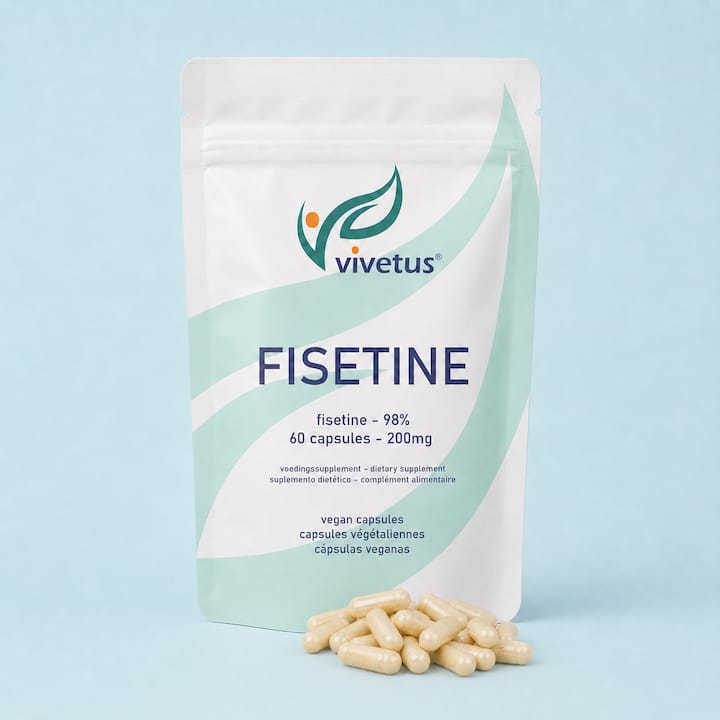
Retail supplements sit in a different pattern entirely, typically ranging from typical supplement doses as a standalone daily dose. Vivetus’s own fisetin product is formulated at a standard supplement dose per capsule, sold in packs of 60, which places it comfortably within the range studied in continuous-dosing human research rather than at the high end of experimental senolytic protocols.
Bioavailability complicates this comparison further. Fisetin has low oral bioavailability in its plain form, meaning most of an ingested dose never reaches the bloodstream intact. That is the rationale behind formulation strategies designed to raise absorption, and it is a genuine double-edged consideration: a formulation that meaningfully increases systemic exposure changes the risk calculus, not just the benefit calculus. A capsule engineered for higher absorption is not simply “the same dose but more effective.” It can also mean more of the compound reaching tissues and, potentially, more opportunity for the CYP and transporter interactions discussed above. Readers curious about how formulation affects absorption can find more detail in how fisetin absorption works.
The honest caveat here is that nobody has established the long-term safety profile of high, intermittent, senolytic-style dosing in humans. Short trials measuring tolerability over weeks are not the same as years of exposure data, and that gap is the single biggest unresolved question in fisetin safety research.
Clinical trials, safety endpoints and remaining evidence gaps
The human evidence base for fisetin bijwerkingen is real but modest in scale. Published small human pharmacokinetic and tolerability studies have tested specific doses and reported safety endpoints alongside efficacy measures, generally finding minimal adverse events at the doses tested. These are not large phase III trials with thousands of participants; they are smaller studies designed to establish whether a dose is tolerable at all before larger efficacy work proceeds.
Several clinical trials actively measure safety and tolerability alongside efficacy. A breast cancer survivor trial is assessing fisetin’s impact on physical function while tracking tolerability, and a carpal tunnel syndrome trial is evaluating intermittent dosing with safety and tolerability as explicit endpoints, not an afterthought bolted onto an efficacy study.
Statistic callout: Some clinical trials exclude participants taking various prescription medicines, including anticoagulants and drugs for chronic conditions, due to safety uncertainties, a design choice that reflects genuine uncertainty about how fisetin behaves alongside those treatments rather than routine trial caution.
The exclusion criteria themselves are one of the most informative things a lay reader can look at. When a trial screens out people on statins, psychotropics, or immunosuppressants, that is the research community telling you, implicitly, where the safety unknowns concentrate. It is a more honest signal than any marketing claim.
Three gaps stand out clearly from the current evidence:
- Long-term safety. No study has followed continuous or repeated intermittent fisetin use over years, which is the timeframe most people considering it for healthy ageing actually care about.
- Safety in special populations. Pregnant people, children, and those with significant organ impairment are absent from the trial record almost entirely.
- Combination safety with prescription medicines. Because trials exclude these combinations by design, real-world interaction data will only accumulate slowly, through case reports and post-market observation, rather than controlled study.
None of this means fisetin is unsafe. It means the evidence answers “is it tolerated over several weeks in relatively healthy adults” reasonably well, and answers “what happens over five years, or alongside my blood thinner” barely at all.
Practical steps to reduce risk while taking fisetin
If you have weighed the cautions above and decided fisetin makes sense for you, a few practical habits meaningfully lower the risk profile.
- Start with a lower daily dose and split it. Taking a smaller amount, or dividing your daily dose across two meals rather than one large serving, reduces the peak gastrointestinal exposure that drives most reported complaints.
- Get a medication review before you start. Bring a full list of everything you take, prescription drugs, over-the-counter medicines, and other supplements, to a pharmacist or GP conversation. This is the single most effective step for catching a potential interaction before it becomes a problem.
- Choose conservative formulations first. Until a clinician has confirmed there is no interaction concern, standard-dose capsules make more sense than high-absorption formulations designed to maximise systemic exposure.
- Take it with food. A meal slows gastric emptying and buffers the digestive tract, which tends to reduce nausea and bloating linked to polyphenol supplements generally.
Pro Tip: Keep a simple daily note for the first two weeks, what dose, what time, with food or not, and any symptoms. If something does go wrong, that log makes it far easier for a clinician to work out what happened.
Stop taking fisetin and contact a clinician promptly if you notice unusual bruising or bleeding, severe or persistent gastrointestinal symptoms, signs of an allergic reaction such as rash or swelling, or unexpected changes on routine blood tests, particularly liver function or INR results if you are on an anticoagulant. None of these signs are common based on current tolerability data, but “uncommon” is not the same as “impossible,” and acting early costs nothing.
Our editorial view on fisetin safety
Most coverage of fisetin online falls into one of two unhelpful camps: breathless senolytic enthusiasm that treats every preclinical mouse finding as settled human science, or reflexive alarmism that treats any polyphenol interaction risk as a reason to avoid supplements entirely. Neither serves a reader trying to make a genuinely informed decision.
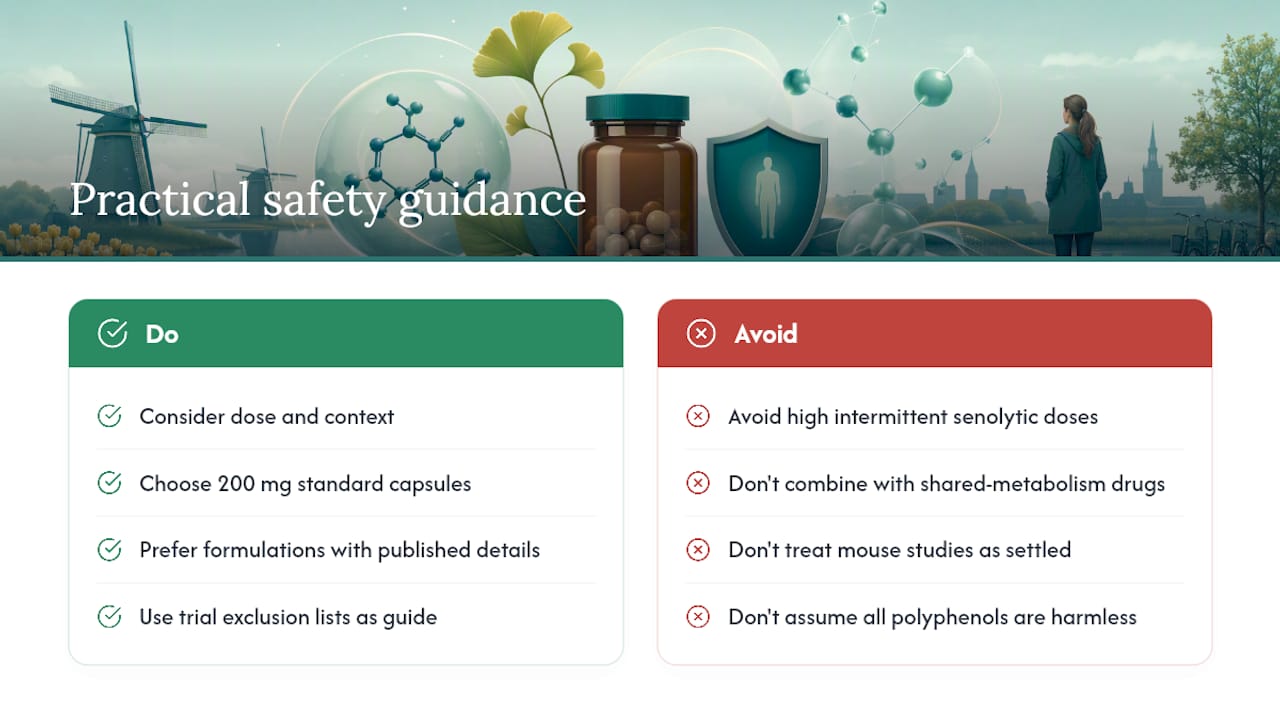
The more useful frame is dose-and-context. Food-level and standard supplement doses of fisetin have a reassuring short-term tolerability record. The genuine caution belongs almost entirely to two scenarios: high intermittent senolytic-style dosing, where long-term human data simply does not exist yet, and combination with drugs that share fisetin’s metabolic pathways. The fisetin product described here is in a standard 200mg capsule format and includes published formulation details rather than vague “proprietary blend” language, placing it on the conservative side of that dose spectrum. That is a defensible position given where the trial evidence currently sits, not a marketing accident.
What people underestimate is how much clinical trial exclusion lists tell you. Researchers designing these studies are not being overcautious for the sake of paperwork. They are drawing a line around exactly the populations where interaction risk is plausible but unquantified, and that line is one of the most reliable pieces of practical guidance available to anyone outside a trial setting. If you are on the medicines those trials exclude, that exclusion is your answer.
— Jord
Vivetus® fisetin: what you get and how to start safely
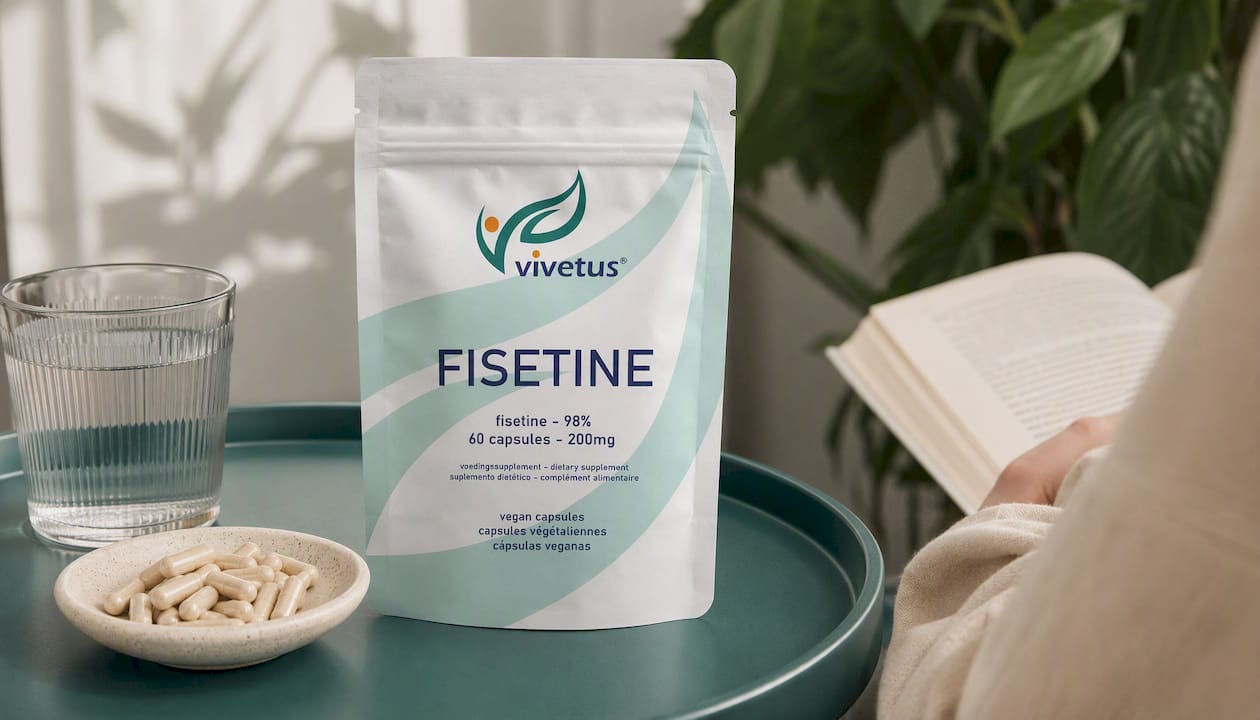
Fisetin supplements commonly come in packs of 60 capsules at 200mg each, a dose that sits within the range used in continuous human tolerability research rather than at the experimental high end of senolytic protocols. That positioning matters if you have read this far: it means starting conservatively is already built into the product, not something you have to work out yourself.
Vivetus publishes its formulation reasoning openly, including how absorption strategies affect exposure, so you can judge the dose you are taking rather than relying on a vague label claim. Before starting, a quick medication review with your pharmacist or GP remains the single best safety step, particularly if you take anticoagulants, statins, or any narrow-therapeutic-index medicine. You can view the full product specification and browse the wider fisetin range to compare formats, and subscription ordering is available for anyone who wants to avoid reordering each month once a clinician has confirmed the dose suits them.
Sources
- Possible side effects of polyphenols and their interactions with medicines — PMC
- Fisetin - an overview | ScienceDirect Topics
- Clinicaltrials
- PubMed: relevant fisetin study (example)
This article is general information, not a substitute for advice from a qualified doctor. Consult a qualified healthcare professional about your own circumstances before acting on anything here.