

Why oxidative damage occurs: a 2026 guide
TL;DR:
- Oxidative damage results from excess reactive oxygen species overwhelming the body’s antioxidant defenses, harming DNA, lipids, and proteins. Supporting endogenous enzyme systems and reducing external triggers are more effective than broad antioxidant supplements in preventing cellular ageing and disease.
Oxidative damage is defined as the molecular harm caused when reactive oxygen species (ROS) exceed the body’s antioxidant defences, disrupting cellular redox homeostasis. This imbalance attacks DNA, lipids, and proteins simultaneously, making it a central driver of cellular ageing. Understanding why oxidative damage occurs requires looking at both the internal machinery that generates ROS and the external triggers that push production beyond safe limits. The body’s containment systems, including enzymes like peroxiredoxins (PRX), superoxide dismutase, and catalase, normally keep ROS at physiological levels. When those systems are overwhelmed, oxidative distress begins.
Why oxidative damage occurs: the biological mechanisms
Oxidative damage arises when ROS production exceeds the capacity of antioxidant enzymes to neutralise them, blocking essential processes like cell signalling and gene expression. The body generates ROS continuously as a normal byproduct of metabolism. The problem is not ROS itself. The problem is loss of control.
The two types of ROS
ROS include both free radicals and stable non-radical oxidants, each with different reactivity profiles. Free radicals such as superoxide and the hydroxyl radical are highly unstable. They react within nanoseconds of formation, making them difficult to target with external supplements. Hydrogen peroxide, by contrast, is a stable non-radical oxidant that travels between cellular compartments and acts as a signalling molecule.
Mitochondria as the primary ROS source
The mitochondrial respiratory chain produces the largest share of endogenous ROS. During ATP synthesis, electrons occasionally leak from the chain and react with oxygen to form superoxide. NADPH oxidase enzymes also generate ROS deliberately, particularly in immune cells responding to infection. Both sources are normal and necessary. The issue arises when spatiotemporal control of ROS is lost, triggering metabolic disease.

Oxidative eustress versus oxidative distress
Not all ROS activity is harmful. Oxidative eustress refers to beneficial ROS signalling involved in immune defence, wound repair, and cellular adaptation. Oxidative distress occurs when ROS overwhelm containment systems and begin damaging macromolecules. The distinction matters because it explains why eliminating all ROS is counterproductive. The goal is balance, not absence.
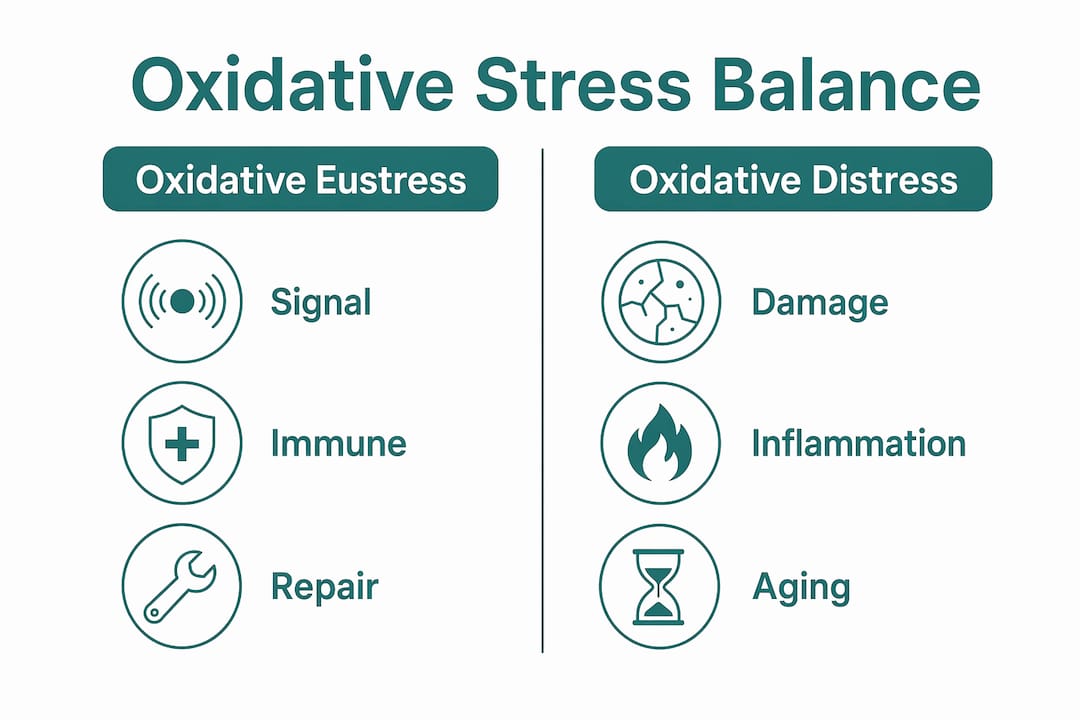
A critical but underappreciated cause of oxidative distress is peroxiredoxin saturation. When PRX enzymes become saturated under high ROS loads, the containment system fails even if ROS production has not dramatically increased. This means oxidative damage can escalate from a containment failure, not just from excess production.
Pro Tip: Focusing solely on reducing ROS production misses half the picture. Supporting your body’s containment enzymes, particularly through adequate selenium intake for glutathione peroxidase function, addresses the other half.
What external factors drive oxidative damage?
Exogenous triggers raise ROS production beyond what endogenous systems can handle. Pollutants, heavy metals, cigarette smoke, and ionising radiation all heighten ROS generation and cumulative tissue damage. Lifestyle choices compound the effect significantly.
The main external contributors include:
- Cigarette smoke: Delivers a direct bolus of free radicals into lung tissue and activates NADPH oxidase in airway cells, sustaining ROS production long after exposure ends.
- Air pollution and ozone: Even short ozone exposure induces lipid peroxidation and inflammation in airways. Repeated exposure creates a cycle of tissue damage and inflammatory ROS generation.
- Ionising radiation: X-rays and UV radiation split water molecules inside cells, producing hydroxyl radicals directly. These are among the most reactive species known.
- Poor diet: High-fat and high-carbohydrate diets increase mitochondrial electron leak and activate NADPH oxidase. Diets low in micronutrients also deplete cofactors needed by antioxidant enzymes.
- Physical inactivity: Moderate exercise actually reduces oxidative stress over time by upregulating endogenous antioxidant enzymes. Inactivity removes this adaptive stimulus.
- Heavy metals: Lead, cadmium, and mercury interfere directly with antioxidant enzyme function, reducing the body’s capacity to neutralise ROS even at normal production levels.
Oxidative damage and inflammation form a vicious cycle. Inflammatory cells release ROS as part of their response, which worsens tissue damage, which triggers more inflammation. External triggers that initiate this cycle are therefore doubly harmful. Managing inflammation is not separate from managing oxidative stress. They are the same problem viewed from different angles.
How does oxidative damage affect cells and ageing?
Oxidative damage manifests in three distinct molecular forms, each with serious biological consequences. DNA base modifications, lipid peroxidation, and protein oxidation each disrupt cellular function in different ways, and all three accumulate with age.
| Damage type | Mechanism | Biological consequence |
|---|---|---|
| DNA base modification | Hydroxyl radical converts guanine to 8-oxoguanine | Mutations, impaired gene expression, cancer risk |
| Lipid peroxidation | Hydroxyl radical abstracts hydrogen from polyunsaturated fatty acids | Membrane disruption, reactive aldehyde production |
| Protein oxidation | ROS alter amino acid side chains | Protein aggregation, loss of enzyme function |
Researchers have identified over 20 oxidative base lesions with high mutagenic potential, all linked to ageing and chronic disease. That number reflects the breadth of DNA vulnerability, not just a single weak point.
Lipid peroxidation is particularly insidious. The hydroxyl radical abstracts a hydrogen atom from polyunsaturated fatty acids in cell membranes, starting a chain reaction. Reactive aldehydes like malondialdehyde are produced as byproducts and go on to damage proteins in nearby structures. Clinicians use malondialdehyde as a biomarker of systemic oxidative stress for this reason.
Protein oxidation causes aggregation and functional loss. Aggregated proteins are a hallmark of neurodegenerative conditions including Alzheimer’s disease and Parkinson’s disease. The connection between oxidative distress and neurodegeneration is therefore not speculative. It is mechanistic and well-documented.
Why do standard antioxidant supplements often fail?
Broad-spectrum antioxidant supplementation frequently fails clinically because most supplements lack the targeting needed to reach ROS at the site and moment of production. A vitamin C tablet in the bloodstream cannot intercept a hydroxyl radical forming inside a mitochondrion in a liver cell. The reaction rates and locations simply do not match.
Endogenous antioxidant networks outperform external antioxidants in maintaining redox balance because they operate at the right place and time. Superoxide dismutase sits inside mitochondria. Glutathione peroxidase works within the cytoplasm. Catalase is concentrated in peroxisomes. Each enzyme is positioned precisely where its target ROS is generated.
The NRF2 pathway is the body’s master regulator of antioxidant gene expression. When oxidative stress rises, NRF2 activates hundreds of protective genes simultaneously. Supporting this pathway produces a coordinated, targeted response that no single supplement can replicate. Precision redox medicine now focuses on activating NRF2 and similar endogenous pathways rather than flooding the system with external scavengers.
Effective strategies for supporting endogenous antioxidant defences include:
- Dietary polyphenols: Compounds in green tea, berries, and olive oil activate NRF2 without suppressing beneficial ROS signalling.
- Regular moderate exercise: Upregulates superoxide dismutase and glutathione peroxidase through hormetic ROS signalling during physical activity.
- Caloric moderation: Reduces mitochondrial electron leak and lowers baseline ROS production.
- Reducing exposure to exogenous triggers: Cutting cigarette smoke and processed food intake removes two of the largest external ROS loads.
- Targeted micronutrient support: Selenium, zinc, and manganese are cofactors for key antioxidant enzymes and are frequently depleted in modern diets.
Pro Tip: Before adding any antioxidant supplement, consider whether your lifestyle is actively generating excess ROS. Addressing the source is more effective than attempting to neutralise the output. You can read more about evidence-based antioxidant options to understand what the clinical evidence actually supports.
Key takeaways
Oxidative damage occurs when ROS overwhelm the body’s containment systems, causing molecular harm to DNA, lipids, and proteins that accumulates into chronic disease and accelerated ageing.
| Point | Details |
|---|---|
| ROS balance is the goal | The body needs ROS for signalling; damage occurs only when containment systems fail. |
| Containment failure matters | Peroxiredoxin saturation can trigger oxidative distress even without increased ROS production. |
| External triggers compound risk | Cigarette smoke, pollution, and poor diet all activate NADPH oxidase and deplete antioxidant enzymes. |
| Three molecular targets | DNA, lipids, and proteins each sustain distinct damage types that link to ageing and chronic disease. |
| Endogenous pathways outperform supplements | Supporting NRF2 and antioxidant enzymes is more effective than broad-spectrum external scavenging. |
My view on what health-conscious people get wrong about oxidative stress
The most common mistake I see is treating oxidative stress as a problem of deficiency. People assume they simply need more antioxidants, so they take high-dose vitamin C or vitamin E and expect results. The clinical evidence does not support that approach, and in some contexts, high-dose antioxidants have actually interfered with beneficial ROS signalling during exercise adaptation.
What the research makes clear is that oxidative damage is primarily a problem of control, not quantity. The body’s own enzyme systems, when functioning well and properly supported, are far better equipped to manage ROS than anything you can swallow. The hydroxyl radical reacts so fast that no orally administered supplement could realistically intercept it. Endogenous enzymes are already positioned at the source.
The practical implication is straightforward. Reducing external ROS triggers, supporting antioxidant enzyme cofactors through diet, and activating the NRF2 pathway through lifestyle choices will do more than any generic supplement stack. I would also encourage anyone seriously interested in this area to look at how antioxidants support healthy ageing with a critical eye, focusing on mechanisms rather than marketing claims.
The oxidative-inflammation cycle is the piece most people overlook entirely. If chronic inflammation is present, it will continuously regenerate oxidative stress regardless of how many antioxidants you consume. Addressing inflammation through diet, sleep, and stress management is not optional. It is central to breaking the cycle.
— Jord
Vivetus and targeted antioxidant support
Understanding the science behind oxidative damage changes how you approach supplementation. Generic products rarely address the specific enzyme pathways and cofactors that matter most.
Vivetus has developed the Energy & Vitality bundle with this in mind. The formulation is designed to support the body’s endogenous antioxidant defences rather than simply adding external scavengers. The product aligns with current clinical thinking on redox balance, focusing on the micronutrients and compounds that help your own protective systems function at their best. Free shipping applies on orders over €50, and the full product details are available on the Vivetus website.
FAQ
What is oxidative damage, exactly?
Oxidative damage is the molecular harm caused when reactive oxygen species exceed the body’s antioxidant defences, injuring DNA, lipids, and proteins at the cellular level.
Is oxidative damage harmful to long-term health?
Accumulated oxidative damage is directly linked to accelerated cellular ageing and chronic conditions including cardiovascular disease and neurodegeneration, making sustained oxidative distress a significant health concern.
What causes oxidative damage to increase?
Both internal factors, such as mitochondrial dysfunction and peroxiredoxin saturation, and external triggers, including cigarette smoke, pollution, and poor diet, raise ROS beyond safe levels.
Why do antioxidant supplements not always work?
Most supplements lack the targeting to reach ROS at their site of production inside cells. Endogenous enzymes like superoxide dismutase and glutathione peroxidase are far more effective because they operate precisely where ROS are generated.
How can you reduce oxidative damage practically?
Reducing exposure to exogenous ROS triggers, supporting antioxidant enzyme cofactors through diet, exercising moderately, and activating the NRF2 pathway through polyphenol-rich foods are the most evidence-supported approaches.