

Supplement choices: why 42% of buyers trust reviews
Supplements promise improved vitality, better sleep, and sharper focus. Yet most buyers find themselves caught between conflicting product claims, enthusiastic testimonials, and cautious expert warnings. 68% of supplement buyers research products online before purchasing, with 42% citing online reviews as their top deciding factor. This guide examines how user reviews shape supplement decisions, where they add genuine value, where they fall short, and how to combine real-world feedback with scientific evidence to make choices you can feel confident about.
Table of Contents
- How user reviews influence supplement choice
- Social proof and trust: why experience matters
- Balancing expert advice and user feedback
- Practical tips: making the most of user reviews
- Energy and vitality: explore science-backed supplement bundles
- Frequently asked questions
Key Takeaways
| Point | Details |
|---|---|
| Reviews shape supplement decisions | User reviews are a major influence, especially for adults seeking vitality and healthy aging support. |
| Combine reviews and evidence | Balance real-world feedback with clinical research and professional advice for safer choices. |
| Beware of review pitfalls | Identify fake and incentivized reviews by seeking authentic platforms and cross-referencing information. |
| Integrate practical tips | Apply actionable steps to make sense of reviews and enhance supplement selection confidence. |
How user reviews influence supplement choice
User reviews have become one of the most consulted sources when adults research dietary supplements. The numbers are clear: 42% cite reviews as their top factor when selecting a supplement, and 59% read reviews before committing to a purchase. That level of influence rivals traditional advertising and even healthcare provider recommendations in some demographics.
Reviews serve several distinct functions in the decision-making process. They build trust by offering unfiltered accounts from people with similar health goals. They provide social proof, signaling that a product has worked for others. They also reduce perceived risk, which matters greatly in a market where product quality varies considerably. Positive e-WOM (electronic word-of-mouth) from user reviews significantly influences purchase intentions and brand credibility.
Here is a summary of how reviews affect supplement purchasing behavior:
| Review factor | Impact on buyer behavior |
|---|---|
| Volume of reviews | Higher volume increases perceived reliability |
| Average rating | Ratings above 4.0 strongly correlate with purchase |
| Detailed written feedback | Increases trust and reduces uncertainty |
| Verified purchase status | Boosts credibility of individual reviews |
| Recency of reviews | Recent reviews carry more weight than older ones |
The types of influence reviews exert include:
- Trust building: Buyers feel reassured when many others report positive outcomes
- Social proof: Seeing consistent results across reviewers validates a product’s claims
- Risk reduction: Negative reviews alert buyers to potential side effects or poor quality
- Brand credibility: A pattern of positive reviews strengthens a brand’s reputation over time
Understanding the advantages of nutritional supplements alongside review data gives you a more complete picture before purchasing. It is also worth checking established health supplement myths so that reviews do not reinforce misconceptions.
Social proof and trust: why experience matters
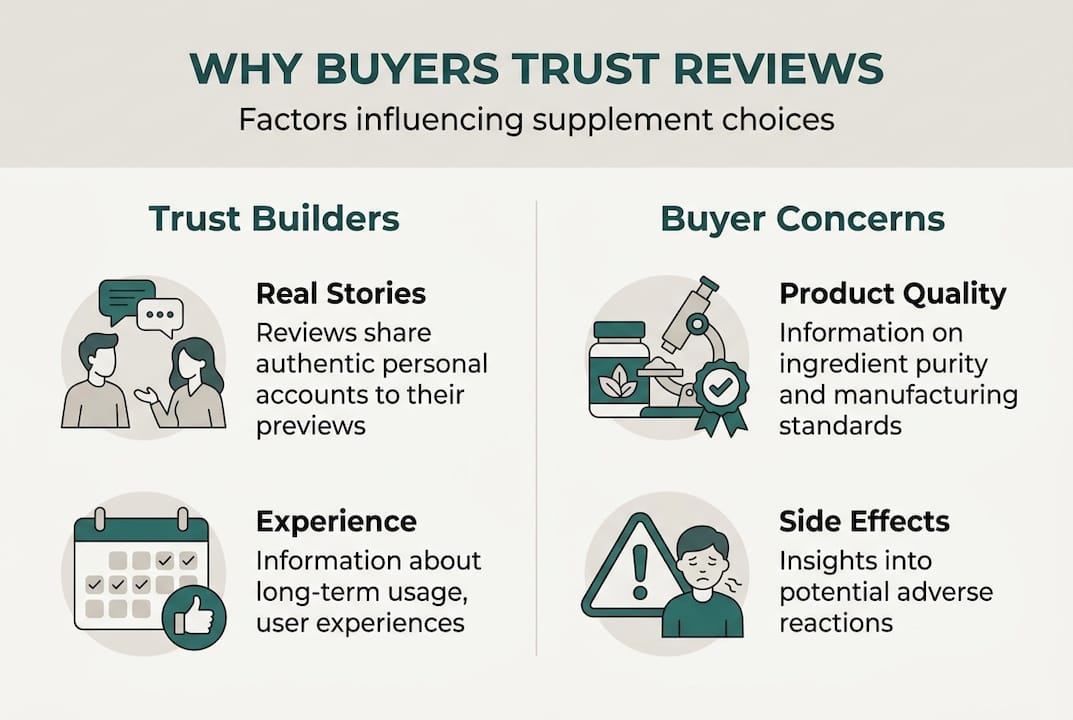
The supplement market is largely self-regulated, which means buyers cannot always rely on regulatory approval as a quality signal. In this environment, peer experience fills a critical gap. Reviews describe real-world efficacy, tolerability, and side effects in ways that product labels rarely do.
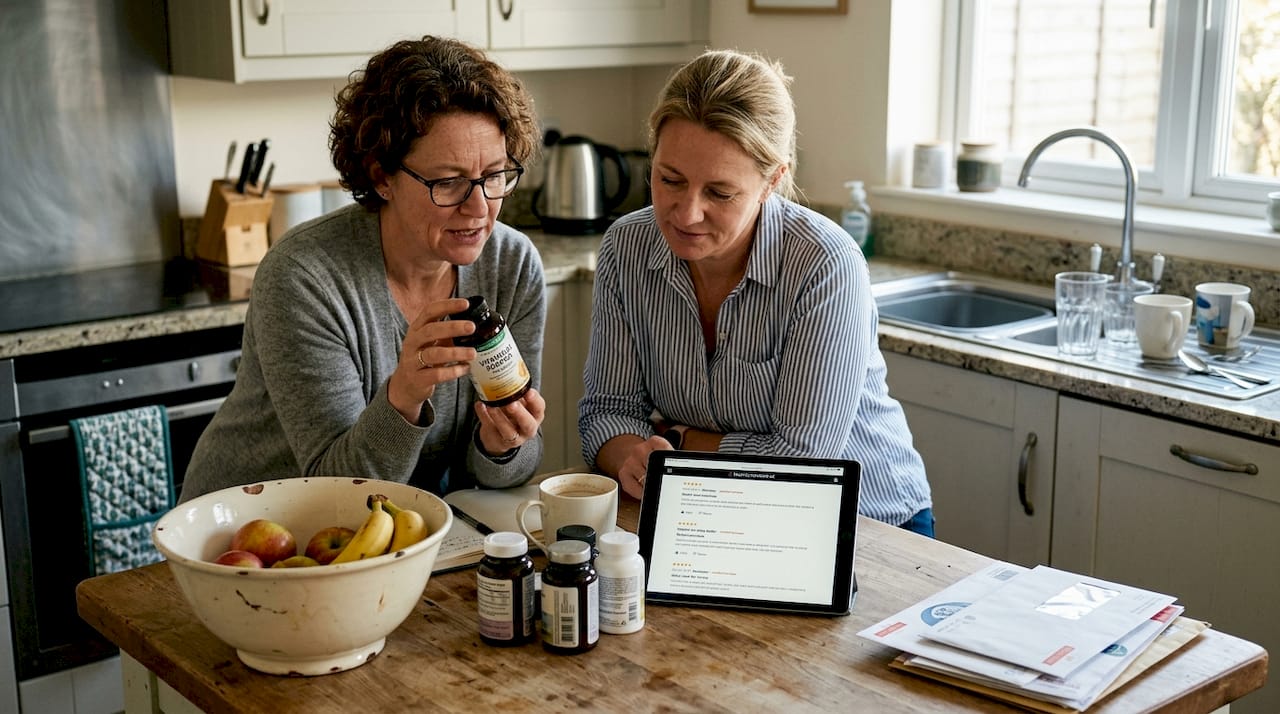
Reviews provide social proof, detailed product performance information, and a sense of trust that formal marketing cannot replicate. When someone reads that a magnesium supplement reduced their fellow buyer’s muscle cramps within two weeks, that specific, personal detail carries weight.
User reviews also help reduce uncertainty in a crowded market. With hundreds of similar products available, buyers use peer feedback to narrow their options. User reviews drive supplement choices through trust and social proof, particularly among adults who are cautious about trying new products.
Key reasons why experiential feedback matters:
- Reviews describe outcomes in practical, relatable terms
- They highlight tolerability issues that clinical trials may not capture
- They reflect diverse age groups, health conditions, and lifestyle factors
- They provide ongoing feedback as formulations or suppliers change
Pro Tip: Do not base your decision on a single glowing review or one negative comment. Look for consistent patterns across a large volume of reviews. If 80% of reviewers report improved energy levels after four weeks, that pattern is meaningful. One outlier is not.
Investing in quality supplement benefits becomes clearer when you understand what real users report versus what marketing claims. For a foundational overview, understanding dietary supplements provides useful context before you start reading reviews.
Balancing expert advice and user feedback
User reviews are persuasive, but they carry inherent limitations. Individual responses to supplements vary based on genetics, diet, existing health conditions, and medication interactions. What works well for one person may be ineffective or even harmful for another.
Experts emphasise prioritising clinical evidence and third-party testing over user reviews when evaluating supplement quality. Clinical trials control for variables that individual reviewers cannot account for. Meta-analyses pool data from thousands of participants, providing far more reliable conclusions than any collection of personal testimonials.
A further concern is that supplements often use ‘science-backed’ as a marketing term based on low-quality data or simply aggregated customer feedback. This blurs the line between genuine clinical evidence and anecdote.
Here is a direct comparison of the two approaches:
| Criteria | Review-based selection | Evidence-based selection |
|---|---|---|
| Data source | Personal testimonials | Clinical trials, meta-analyses |
| Bias risk | High (placebo, incentivised reviews) | Low (controlled methodology) |
| Practical insight | Strong (real-world use) | Limited (controlled conditions) |
| Accessibility | Immediate, free | Requires research effort |
| Reliability | Variable | Consistently higher |
Steps for weighing reviews against clinical evidence:
- Identify the active ingredient and search for peer-reviewed studies on its efficacy
- Check whether the product has undergone third-party testing (NSF, USP, or Informed Sport)
- Read reviews for practical insights on tolerability and dosing experience
- Consult a healthcare professional if you have existing conditions or take medication
- Prioritise products where both clinical data and user feedback align positively
For a structured approach to choosing supplements for healthy aging, combining both sources is the most reliable method. You can also explore how to support healthy ageing through a broader lifestyle and supplement strategy.
Practical tips: making the most of user reviews
Knowing that reviews matter is one thing. Using them effectively is another. The supplement review landscape includes fake entries, incentivised posts, and reviews written without adequate time to assess results. A structured approach helps you extract genuine value.
Fake and incentivised reviews are common in the supplement industry, leading many buyers to reconsider their reliance on review platforms. Awareness of this issue is the first step toward smarter research. Consumers use diverse sources when researching supplements, and reviews are just one piece of a broader information puzzle.
How to identify trustworthy reviews:
- Prioritise verified purchase reviews on established platforms
- Look for reviews that mention specific timeframes, dosages, and outcomes
- Be cautious of reviews that use identical phrasing or appear in clusters
- Check multiple platforms rather than relying on a single retailer’s page
- Note whether negative reviews receive transparent responses from the brand
Step-by-step guide for responsible review use:
- Start with a reputable platform that verifies purchases (Amazon, Trustpilot, or specialist health retailers)
- Filter for reviews from users with similar health goals or age groups to yours
- Cross-reference the product’s key ingredients with clinical research databases such as PubMed
- Check for third-party certifications on the product label or brand website
- Consult a pharmacist or GP if the supplement targets a specific health condition
- Revisit reviews after your own trial period to contribute useful feedback for others
Pro Tip: Diversify your sources. Reviews, clinical studies, and professional advice each provide a different layer of information. No single source is sufficient on its own, particularly for supplements targeting complex health needs such as cognitive function, hormonal balance, or cardiovascular support.
The role of dietary supplements in a healthy ageing strategy becomes clearer when you approach your research systematically rather than relying on any one source.
Energy and vitality: explore science-backed supplement bundles
Applying a structured approach to supplement research takes time, but it leads to better outcomes. If you are looking for a practical starting point, Vivetus offers product bundles designed with healthy ageing and vitality in mind, combining ingredients with documented clinical support.
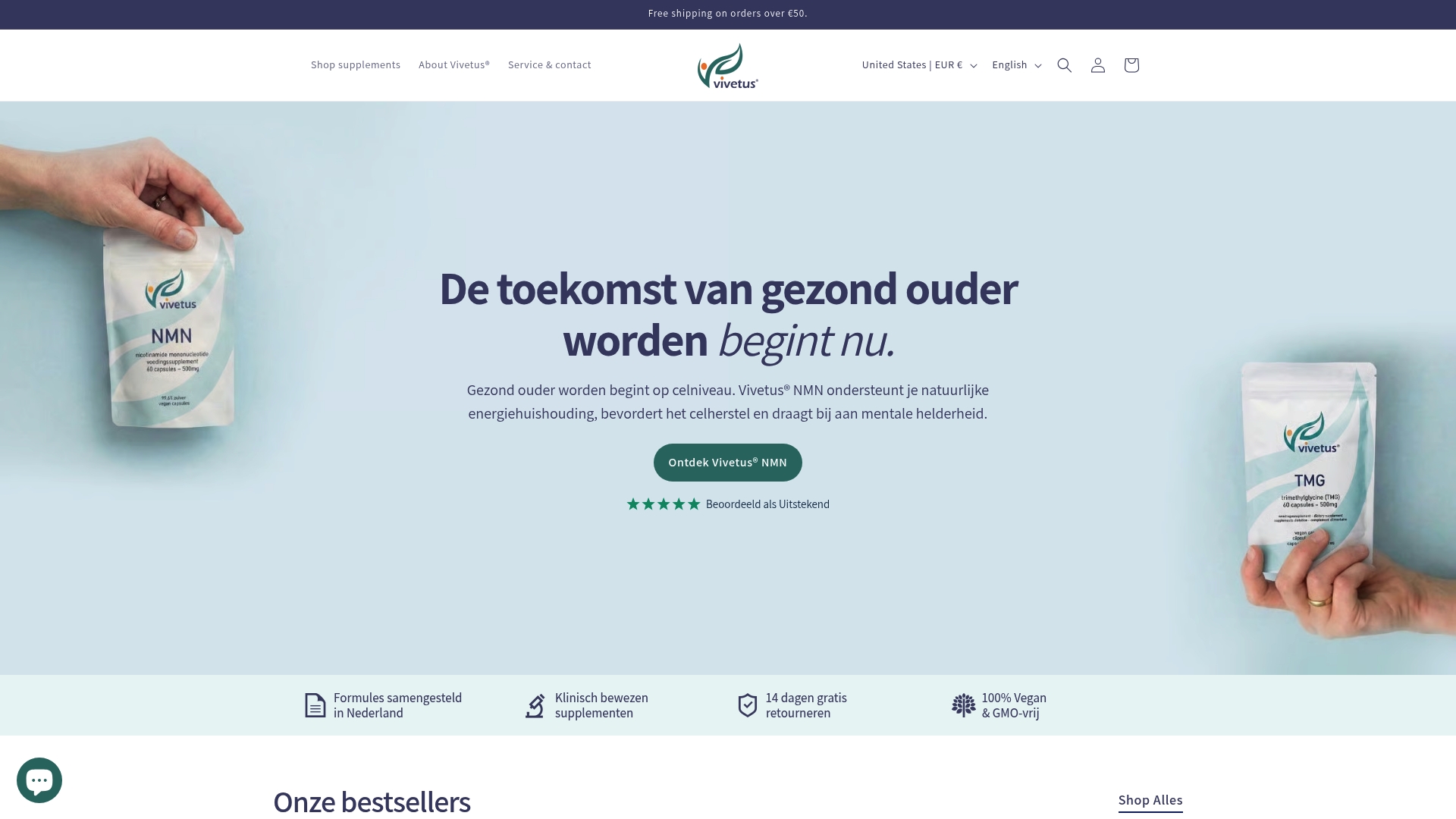
The energy and vitality bundle brings together supplements selected for their evidence base, not just their popularity in reviews. Browsing the full product range gives you access to detailed ingredient information, sourcing transparency, and free shipping on orders over €50. Whether you are refining an existing supplement routine or starting fresh, the range provides a reliable foundation for informed choices.
Frequently asked questions
Are user reviews reliable for choosing dietary supplements?
User reviews offer valuable social proof and practical experience, but they can contain bias or reflect placebo effects. Always combine them with clinical evidence and expert guidance for a balanced decision.
How can I spot fake or incentivised supplement reviews?
Fake reviews often use generic wording, show extreme ratings without detail, or appear in sudden clusters. Use diverse platforms and check for verified purchase status to reduce the risk, as incentivised reviews are common in this industry.
Should I trust online reviews over expert recommendations?
Integrate both sources. User reviews provide real-world insight into tolerability and practical outcomes, but experts prioritise science and clinical studies for safe, effective supplement selection.
Do older adults and younger consumers use supplement reviews differently?
Yes. Adults aged 55 and over rely more heavily on pharmacists for guidance, while younger consumers are strongly influenced by social media reviews, with 45% of Gen Z citing social platforms as their primary source.