

Evidence-backed supplements for graceful ageing: 2026 guide
Many adults over 40 approach supplements with either scepticism or unrealistic hope. Some dismiss them entirely; others expect dramatic reversals of ageing. The reality sits firmly in between. A growing body of research confirms that specific supplements target measurable biological processes tied to ageing, from inflammation to cellular energy production. This article examines what the science actually supports, which supplements have earned their place in an evidence-based routine, and where the genuine limits lie. You will leave with a clearer, more practical understanding of how to use supplements to support vitality as you age.
Table of Contents
- How supplements influence graceful ageing at the cellular level
- Key evidence-backed supplements for graceful ageing
- Limitations, misconceptions, and practical realities
- How to integrate evidence-backed supplements into your daily routine
- A fresh perspective: Supplements as subtle allies, not magic solutions
- Discover science-backed supplements and expert guidance
- Frequently asked questions
Key Takeaways
| Point | Details |
|---|---|
| Evidence matters | Choose supplements shown to affect biomarkers and strength in human studies rather than fad products. |
| Limitations exist | Not all supplements deliver dramatic results; some have limited or mixed evidence in humans. |
| Holistic approach | Supplements complement healthy habits and nutrition, rather than replace them, for graceful ageing. |
| Personalisation counts | Adapting supplement routines to your needs and goals maximises safe and effective benefits. |
How supplements influence graceful ageing at the cellular level
Ageing is not a single process. Researchers have identified a set of biological changes, often called the hallmarks of ageing, that drive physical decline over time. These include chronic low-grade inflammation (sometimes called inflammaging), oxidative stress, mitochondrial dysfunction, and cellular senescence (the accumulation of damaged cells that stop dividing but refuse to die). Supplements that genuinely support graceful ageing tend to act on one or more of these specific mechanisms.
Research published in Nutrition Research Reviews confirms that supplements target ageing hallmarks like inflammation, oxidative stress, mitochondrial dysfunction, and cellular senescence to promote graceful ageing. This is not a vague claim. It means that certain compounds interact with specific biological pathways in measurable ways.
Here is a summary of the core mechanisms that evidence-backed supplements target:
- Anti-inflammatory action: Reduces chronic low-grade inflammation linked to heart disease, cognitive decline, and muscle loss
- Mitochondrial support: Helps cells produce energy more efficiently, countering age-related fatigue and metabolic decline
- Anti-senescence effects: Limits the accumulation of dysfunctional cells that accelerate tissue ageing
- Muscle and bone preservation: Supports lean mass and skeletal integrity, which decline significantly after age 40
- Epigenetic modulation: Some supplements appear to slow biological clocks measurable through DNA methylation patterns
The table below shows how different supplement categories act on these cellular processes:
| Supplement category | Primary mechanism | Key target |
|---|---|---|
| Omega-3 fatty acids | Anti-inflammatory, epigenetic | DNA methylation clocks |
| Creatine monohydrate | Mitochondrial energy, anabolic | Muscle mass, cognition |
| Vitamin D | Telomere preservation, immune | Telomere attrition |
| CoQ10 | Mitochondrial electron transport | Cellular energy production |
| Curcumin | NF-kB pathway inhibition | Chronic inflammation |
| Ashwagandha | Telomerase activation, cortisol | Inflammaging, stress response |
When choosing supplements for healthy ageing, understanding these mechanisms helps you move beyond marketing claims and focus on what the biology actually supports. Not every supplement on a shelf addresses these pathways. Many do not.
“The most meaningful anti-ageing supplements are those with documented effects on measurable biological markers, not just reported feelings of wellness.” This distinction matters enormously when evaluating what to take and why.
Key evidence-backed supplements for graceful ageing
With the mechanisms established, the next question is straightforward: which specific supplements have the strongest human trial data? Several stand out clearly.
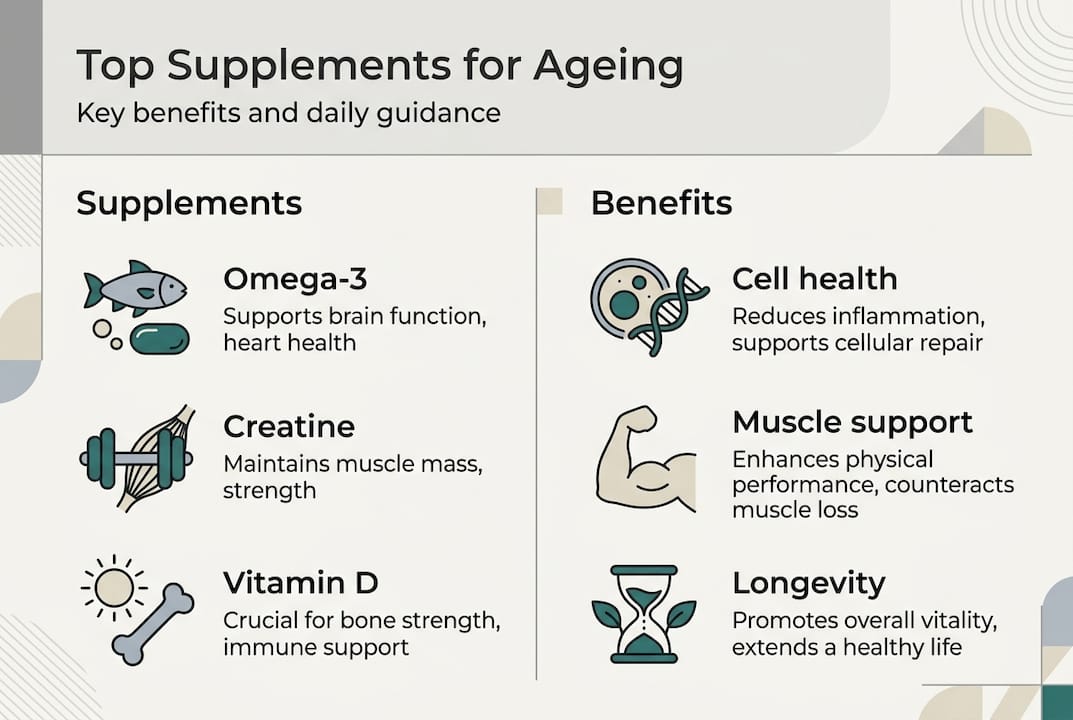
Omega-3 fatty acids are among the most studied. A 2024 study in Nature Aging found that omega-3 fatty acids slow DNA methylation clocks by 0.16 to 0.32 units over three years in older adults. That translates to roughly 2.9 to 3.8 months of slower biological ageing. This is not a trivial effect. DNA methylation clocks are among the most reliable biomarkers of biological age available today.
Creatine monohydrate is often associated with athletes, but the evidence for older adults is compelling. At doses of 3g or more per day, creatine supplementation increases lean mass by approximately 1.2kg, improves muscle strength, supports bone health, enhances cognition, and improves functional ability in older adults. These are outcomes that directly affect independence and quality of life.
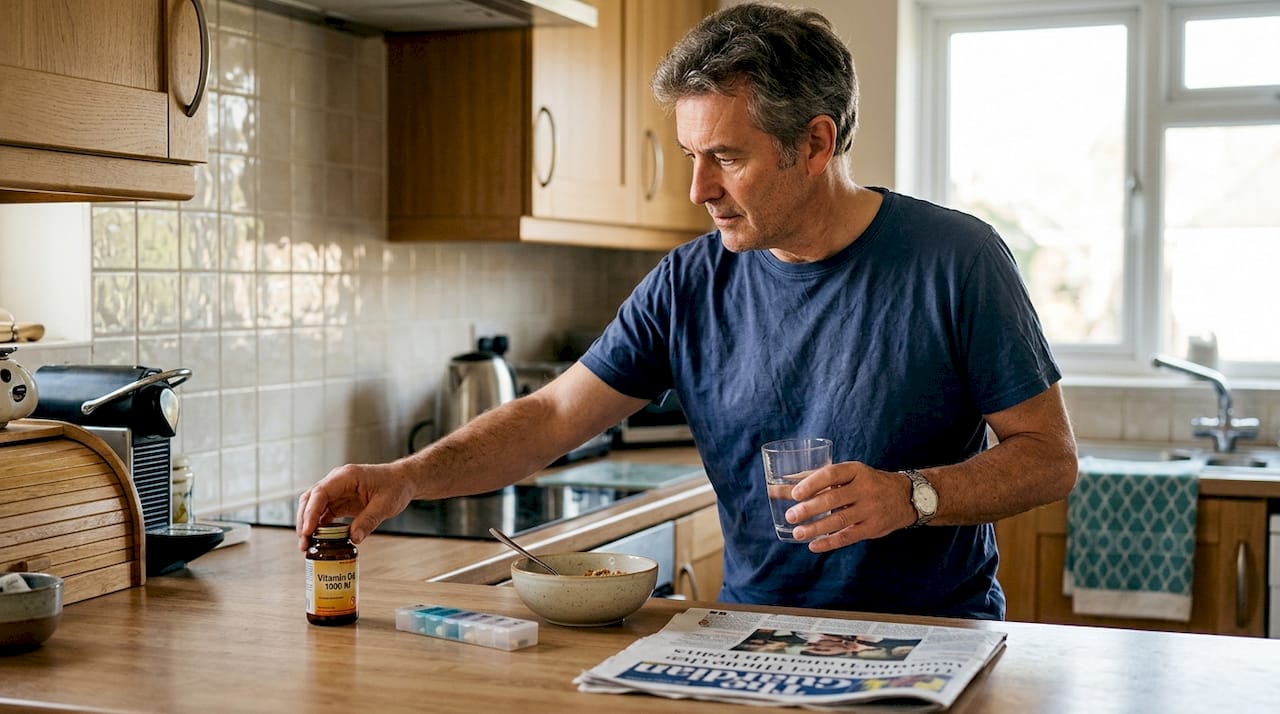
Vitamin D at 2000 IU per day has been shown to reduce telomere attrition by 140 bp over four years, and it amplifies the effects of omega-3 supplementation when the two are combined. Telomere length is a well-established marker of cellular ageing.
The supplement advantages of these compounds become clearer when viewed together. Here is a practical overview:
| Supplement | Daily dose | Primary benefit | Evidence level |
|---|---|---|---|
| Omega-3 (EPA/DHA) | 1,000 to 2,000mg | Slows DNA methylation ageing | Strong (RCT data) |
| Creatine monohydrate | 3 to 5g | Lean mass, cognition, bone | Strong (multiple RCTs) |
| Vitamin D3 | 2,000 IU | Telomere preservation | Moderate to strong |
| CoQ10 | 100 to 200mg | Mitochondrial energy | Moderate |
| Curcumin (with piperine) | 500 to 1,000mg | Inflammation reduction | Moderate |
| Ashwagandha | 300 to 600mg | Telomerase, stress, sleep | Emerging, promising |
For practical supporting ageing with supplements, consider starting with the three that have the strongest evidence: omega-3, creatine, and vitamin D. These address different mechanisms and work well in combination. CoQ10 and curcumin are reasonable additions, particularly if energy or inflammation is a concern. Ashwagandha rounds out a routine focused on stress, sleep, and skin health.
Limitations, misconceptions, and practical realities
The evidence for certain supplements is strong. But the supplement industry as a whole is not uniformly reliable, and some popular products fall short of their claims.
NAD+ precursors (such as NMN and NR) have attracted significant attention based on animal studies showing impressive effects on cellular energy and longevity. In human trials, however, the picture is far less clear. Research published in Nature Metabolism confirms that NAD+ precursors show limited efficacy in human ageing trials despite strong preclinical promise. The gap between mouse models and human outcomes is a recurring problem in this field.
Another instructive data point comes from longevity research. A 2025 study examining supplement use among centenarians found that only 10 to 12% use supplements regularly. This does not mean supplements are useless. It does mean that extreme longevity appears to be driven primarily by genetics, diet, social connection, and physical activity, not supplement routines.
Here are the most common misconceptions worth addressing directly:
- More is always better. Higher doses do not consistently produce better outcomes and can cause harm. Stick to evidence-based dosing ranges.
- Supplements replace a poor diet. They do not. Supplements work best as additions to a nutritious, varied diet, not substitutes for one.
- If it works in animals, it works in humans. This assumption has repeatedly failed in clinical trials, particularly for NAD+ precursors and certain antioxidants.
- All antioxidant supplements are beneficial. High-dose antioxidants can actually blunt beneficial adaptive responses to exercise. Context matters.
- Results are immediate. Most evidence-backed supplements require weeks to months of consistent use before measurable effects appear.
Pro Tip: Before adding a new supplement, check whether the evidence comes from human randomised controlled trials, not just animal studies or observational data. This single habit will filter out most ineffective products.
For a focused review of antioxidant supplements specifically, it is worth understanding which antioxidants have human trial support and which rely primarily on laboratory or animal data.
How to integrate evidence-backed supplements into your daily routine
Knowing which supplements work is only part of the picture. How and when you take them matters too.
Start by identifying your primary goals. If muscle preservation and physical function are the priority, creatine and vitamin D are logical starting points. If cognitive health and inflammation are the concern, omega-3 and curcumin are well-supported choices. If sleep quality, stress resilience, and skin health matter to you, ashwagandha has growing evidence across all three. Research confirms that ashwagandha enhances telomerase, reduces inflammaging, and improves muscle strength, cognition, sleep, and skin health in older adults.
For those seeking a broad baseline, a quality multivitamin is worth considering. A study cited in Scientific American found that multivitamins slow epigenetic ageing clocks by 1.5 to 2 months per year in adults aged 60 and over across a two-year period. That is a modest but consistent and measurable effect.
Here is a practical framework for building your routine:
- Morning (with food): Omega-3, vitamin D3, multivitamin. Fat-soluble nutrients absorb better with a meal.
- Post-exercise or with a meal: Creatine monohydrate. Timing relative to meals appears to improve uptake.
- Evening (with dinner): Ashwagandha, curcumin with piperine. Both benefit from food co-ingestion and ashwagandha may support sleep onset.
- Ongoing: CoQ10 with a fat-containing meal for optimal absorption.
For guidance on adaptogen benefits including ashwagandha, there is strong rationale for including adaptogens in a routine focused on stress and ageing.
Pro Tip: Supplement synergy is real. Vitamin D and omega-3 taken together produce stronger effects on biological ageing markers than either taken alone. Curcumin without piperine (black pepper extract) is poorly absorbed. Combinations matter as much as individual choices.
Consistency is the most underrated factor. A well-chosen supplement taken irregularly produces little benefit. Set a fixed routine, link it to an existing habit such as breakfast or exercise, and track how you feel over a 12-week period before evaluating results.
A fresh perspective: Supplements as subtle allies, not magic solutions
There is a tendency in health media to swing between two extremes: either supplements are revolutionary tools for extending life, or they are expensive placebos. Neither position is accurate.
The honest picture is more nuanced. Creatine and omega-3 have earned their place through rigorous human trial data. Vitamin D addresses a genuine deficiency common in adults over 40 in northern climates. These are real, measurable benefits. But the centenarian supplement data is a useful corrective. People who live exceptionally long lives are not, as a rule, taking elaborate supplement stacks.
What this tells us is that supplements work best as precision tools within a broader lifestyle. They fill gaps, support specific mechanisms, and add incremental benefit. They do not compensate for poor sleep, sedentary behaviour, chronic stress, or a diet built around processed food. For a grounded, practical approach, the healthy ageing practical guide is a useful reference point alongside any supplement strategy.
The most productive mindset is one of informed pragmatism. Use what the evidence supports, at the doses that have been tested, consistently over time. Expect incremental improvements, not transformations.
Discover science-backed supplements and expert guidance
If you are ready to move from information to action, the next step is finding products that match the evidence. Not all supplements are formulated equally, and sourcing matters as much as the ingredient itself.
At Vivetus, the focus is on curated, evidence-backed supplements designed specifically for adults who take healthy ageing seriously. The range is built around the compounds with the strongest human trial data, including omega-3, creatine, vitamin D, and adaptogenic herbs. Free shipping is available on orders over €50, and the platform supports an international customer base across multiple currencies. Whether you are starting a new routine or refining an existing one, Vivetus provides the products and supporting resources to help you make informed, practical choices.
Frequently asked questions
Which supplement has the strongest evidence for slowing biological ageing?
Omega-3 fatty acids, creatine, vitamin D, and multivitamins show the most robust evidence for slowing biomarkers of ageing and promoting strength in adults over 40. Multivitamins slow epigenetic ageing clocks by 1.5 to 2 months per year in adults aged 60 and over.
Are all anti-ageing supplements equally effective?
No. Some, like omega-3, creatine, and vitamin D, have strong human trial backing, while others such as NAD+ precursors lack convincing evidence for ageing outcomes in humans despite promising animal data.
Is regular supplement use common among exceptionally long-lived individuals?
Centenarians use supplements infrequently, with only 10 to 12% reporting regular use, suggesting supplements play a supporting rather than central role in extreme longevity.
How can you personalise your supplement routine for healthy ageing?
Tailor your choices to your age, health status, and goals, prioritising evidence-backed combinations. Multivitamins slow ageing clocks consistently, while ashwagandha enhances telomerase and supports muscle, cognition, sleep, and skin health in older adults.