

How to choose supplements for healthy aging in 2026
Choosing the right supplements feels overwhelming when you’re over 40 and committed to maintaining vitality. Shelves overflow with products promising energy, strength and cognitive health, yet many lack clear guidance on what actually works. You want evidence, not marketing hype. This guide cuts through confusion with practical, science-backed steps to select supplements that genuinely support healthy aging. You’ll learn to assess your individual needs, identify key nutrients, evaluate quality safely, and monitor results effectively. By the end, you’ll make informed decisions aligned with your health goals.
Table of Contents
- Understanding Your Supplement Needs
- Essential Supplements For Vitality And Healthy Aging
- How To Choose Quality Supplements Safely
- Monitoring Progress And Adjusting Your Supplement Plan
- Explore Vivetus® Supplements For Healthy Aging
- How To Choose Supplements: Frequently Asked Questions
Key takeaways
| Point | Details |
|---|---|
| Personalised approach | Targeted supplementation based on individual needs works better than random choices. |
| Priority nutrients | Adults over 40 benefit most from protein, multivitamins and omega-3s for muscle, cognitive and heart health. |
| Safety first | Supplements can interact with medications, so always consult your healthcare provider before starting. |
| Quality matters | Choose third-party certified brands and avoid excessive doses to reduce risks. |
| Monitor progress | Track energy, strength and cognitive markers to adjust your supplement plan as needed. |
Understanding your supplement needs
Your body’s nutrient requirements shift as you age. What worked in your thirties may no longer suffice in your fifties. Life stage, dietary patterns, activity levels and existing health conditions all influence which supplements benefit you most. Nutritional deficiencies are common in older adults, particularly affecting muscle mass, bone density and cognitive function. Rather than guessing, assess your current diet and lifestyle first.
Start by tracking what you eat for a week. Note protein intake, fruit and vegetable servings, whole grains and healthy fats. Many adults over 40 consume insufficient protein, which accelerates muscle loss. Others skimp on omega-3 rich foods like fatty fish. Identifying these gaps reveals where supplements can fill genuine needs rather than duplicating nutrients you already get adequately.
Consider factors beyond diet. Do you spend time outdoors for vitamin D synthesis? Does medication affect nutrient absorption? Have recent blood tests shown deficiencies? Your answers shape priorities. Someone with documented low vitamin D needs different support than someone deficient in B12 due to reduced stomach acid production.
Key factors to assess before supplementing:
- Current dietary intake and nutrient gaps
- Age-related changes in absorption and metabolism
- Existing health conditions and medications
- Activity level and fitness goals
- Recent blood work showing specific deficiencies
Healthcare providers offer invaluable guidance here. Request comprehensive nutrient testing if you suspect deficiencies. Discuss your health history, current medications and wellness goals. This personalised approach ensures supplements address actual needs rather than perceived ones. Following nutrition guidelines for healthy aging establishes a foundation before adding any products.
Essential supplements for vitality and healthy aging
Once you’ve identified gaps, focus on supplements with robust scientific support for adults over 40. Protein stands out as critical. Age-related muscle loss, called sarcopenia, accelerates after 40 and undermines strength, mobility and metabolic health. Older adults require 1-1.2 grams of protein per kilogram of body weight daily to combat this decline. If you weigh 70 kilograms, that’s 70 to 84 grams daily. Many struggle to consume this through food alone, making protein powder a practical solution.

Multivitamins offer another evidence-backed option. While whole foods remain ideal, busy lifestyles and reduced appetite with age can create micronutrient shortfalls. Multivitamin supplementation in older adults can positively impact cognitive function, according to meta-analyses examining thousands of participants. This doesn’t mean multivitamins prevent dementia, but supporting baseline nutrient status helps maintain mental sharpness.
Omega-3 fatty acids EPA and DHA deserve attention for heart and brain health. Your body cannot efficiently produce these from plant-based ALA, so consuming EPA and DHA from foods or supplements becomes necessary. Fatty fish provides the richest source, but if you eat fish less than twice weekly, supplements ensure adequate intake. Research on evidence for NMN in aging shows emerging compounds may also support cellular energy, though established nutrients remain the priority.
| Supplement | Primary benefit | Typical dose | Evidence strength |
|---|---|---|---|
| Protein powder | Preserves muscle mass | 20-30g per serving | Strong |
| Multivitamin | Supports cognitive function | One daily tablet | Moderate to strong |
| Omega-3 (EPA/DHA) | Heart and brain health | 1000-2000mg combined | Strong |
| Vitamin D | Bone and immune health | 1000-2000 IU | Strong |
Prioritize quality over quantity. A few well-chosen supplements targeting documented needs outperform handfuls of products taken speculatively. Check labels for active ingredient amounts, not just total capsule weight. Some products pad formulations with fillers or use inferior forms of nutrients that absorb poorly.
Key selection criteria:
- Clear labeling of active ingredients and doses
- Bioavailable forms (e.g., methylcobalamin B12, not cyanocobalamin)
- Minimal unnecessary additives or allergens
- Appropriate dosing for your age and health status
Pro Tip: Start with one or two supplements addressing your most significant gaps, then add others gradually while monitoring how you feel. This approach helps identify what genuinely benefits you versus what makes no noticeable difference.
How to choose quality supplements safely
Not all supplements meet the same standards. Regulatory oversight varies dramatically by country. In the US, supplements are regulated as food not medicine, meaning manufacturers need not prove safety or efficacy before selling products. This creates risk. Some supplements contain contaminants, incorrect doses, or unlisted ingredients. Others make exaggerated claims unsupported by research.
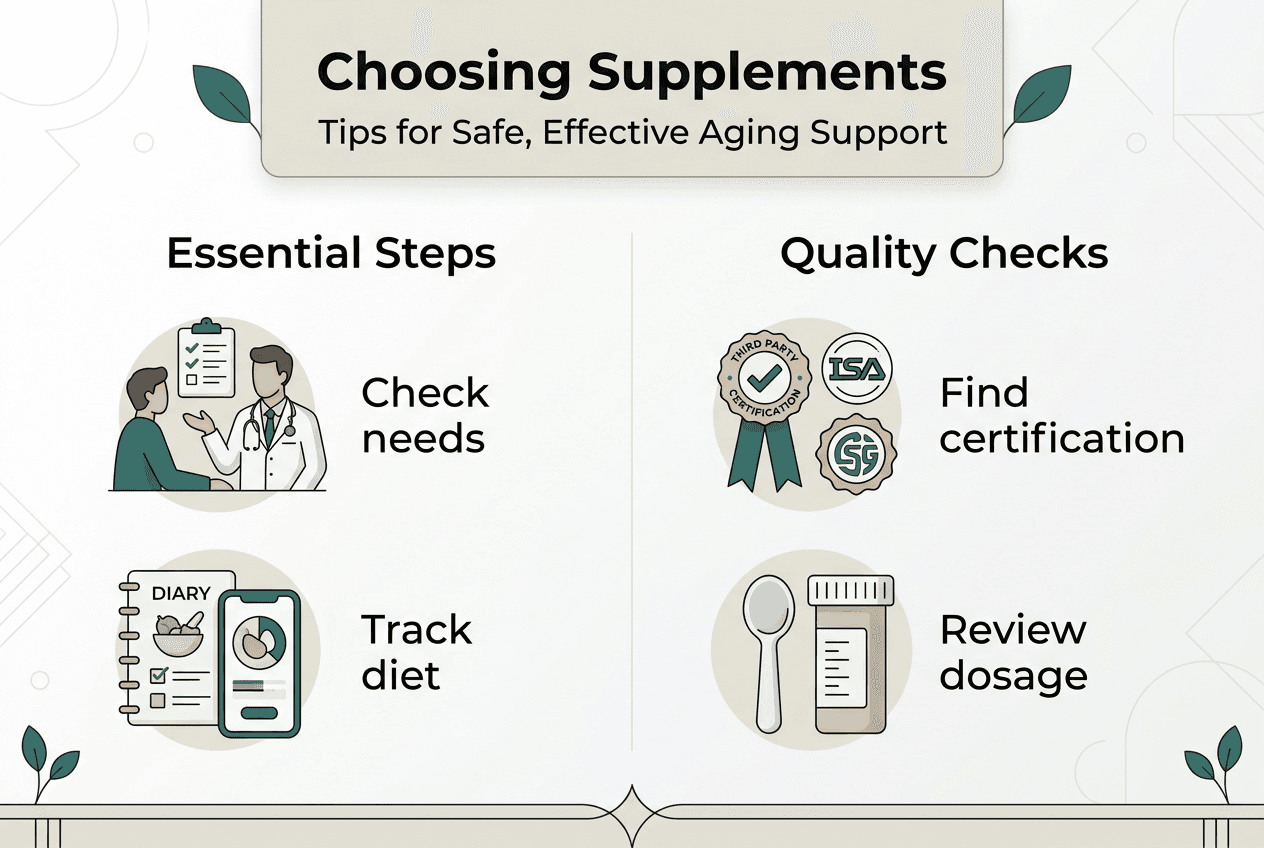
Look for third-party certification from organizations like NSF International, USP, or Informed Choice. These independent bodies test products to verify label accuracy and screen for contaminants. Certification doesn’t guarantee effectiveness, but it confirms you’re getting what the label promises without harmful adulterants.
Dosage matters enormously. More isn’t better and can prove dangerous. Supplements can interact with medications and cause side effects, especially at higher doses or when combined with others. Fat-soluble vitamins like A, D, E, and K accumulate in body tissues, making toxicity possible with excessive intake. Water-soluble vitamins generally pose less risk but megadoses still cause problems.
Consider timing and combinations carefully. Some nutrients compete for absorption. Taking calcium and iron together reduces uptake of both. Others enhance each other, like vitamin D improving calcium absorption. Your pharmacist or healthcare provider can review your complete supplement and medication list to flag potential interactions.
Safety checklist:
- Choose third-party certified brands when possible
- Follow recommended doses unless advised otherwise by your doctor
- Inform healthcare providers about all supplements you take
- Watch for side effects like digestive upset, headaches, or unusual fatigue
- Store supplements properly to maintain potency
Pro Tip: Keep a supplement journal noting what you take, when and any effects noticed. This record proves invaluable during medical appointments and helps track whether products deliver promised benefits.
Understand common myths to avoid poor choices. Many believe natural equals safe, but natural substances can be potent and risky. Others assume supplements approved for sale must be effective, yet approval doesn’t require efficacy proof. Reading about common supplement myths debunked protects you from marketing manipulation. When exploring specific compounds, consult detailed resources like this guide to NMN supplementation to make informed decisions.
Taking supplements without professional guidance risks wasting money on unnecessary products or, worse, causing harm through interactions and excessive doses. Always prioritise food first, then supplement strategically to address documented gaps.
Monitoring progress and adjusting your supplement plan
Supplements work gradually, not overnight. Track meaningful markers rather than expecting dramatic changes. Notice energy levels throughout the day. Do you maintain focus during afternoon tasks? Has muscle soreness after exercise decreased? Can you climb stairs without breathlessness? These functional improvements matter more than abstract lab values for most people.
Schedule follow-up blood tests three to six months after starting supplementation. Compare results to baseline measurements. Has vitamin D risen to optimal range? Did B12 levels normalise? Objective data confirms whether your regimen addresses deficiencies effectively or needs adjustment. Some nutrients like iron require careful monitoring to avoid excess accumulation.
Protein-based multinutrient therapy improves muscle strength and markers in sarcopenia patients, but individual responses vary. What works brilliantly for one person may prove less effective for another due to genetic differences, gut health variations or other factors. However, nutritional supplements have been proposed for sarcopenia but findings are inconsistent, highlighting why personalised monitoring beats generic protocols.
Adjust your approach based on results and changing circumstances. Perhaps you’ve improved diet quality and no longer need a multivitamin. Maybe increased exercise demands more protein support. Life transitions like illness, stress or travel affect nutrient needs. Flexibility ensures your supplement plan remains relevant.
Steps to monitor and adjust effectively:
- Establish baseline measurements through blood tests and functional assessments before starting supplements.
- Track daily energy, sleep quality, strength and cognitive clarity in a simple journal.
- Schedule follow-up testing after three to six months to measure objective changes.
- Discuss results with your healthcare provider to interpret findings and adjust doses or products.
- Reassess needs annually or when health status, medications or lifestyle change significantly.
- Discontinue supplements that show no benefit after adequate trial periods to avoid unnecessary expense.
| Strategy | Advantages | Disadvantages |
|---|---|---|
| Food-first approach | Provides complete nutrition with fibre and phytonutrients | May not meet increased needs in older adults |
| Targeted single nutrients | Addresses specific deficiencies precisely | Requires testing to identify gaps |
| Comprehensive multivitamin | Convenient coverage of multiple nutrients | May include unnecessary amounts of some vitamins |
| Condition-specific formulas | Tailored to particular health goals | Often more expensive and less researched |
Consider exploring specialised products designed for healthy aging. Options like classic supplements for aging bundle complementary nutrients, simplifying your routine while ensuring comprehensive support. These curated combinations often reflect current research on synergistic effects between nutrients.
Remember that supplements complement, never replace, healthy lifestyle habits. Continue prioritising whole foods, regular physical activity, quality sleep and stress management. These foundations matter more than any pill. Supplements fill gaps and optimise what you’re already doing well.
Explore Vivetus® supplements for healthy aging
Now that you understand how to choose supplements strategically, consider exploring options designed specifically for adults committed to healthy aging. Vivetus® offers scientifically formulated products addressing common nutrient gaps in people over 40. Our range includes TMG for methylation support, which helps maintain cellular processes that decline with age.

For those interested in supporting cellular energy production, NMN supplements provide a research-backed approach to vitality. We also offer carefully crafted bundles like our energy and vitality supplement bundle, combining complementary nutrients for comprehensive support. Each product undergoes rigorous quality testing to ensure you receive exactly what the label promises. Explore our range to discover trusted, high-quality supplements aligned with the evidence-based principles outlined in this guide.
How to choose supplements: frequently asked questions
Which supplements should I prioritise after age 40?
Focus on protein to preserve muscle mass, vitamin D for bone health, omega-3 fatty acids for heart and brain function, and a quality multivitamin if dietary intake proves inconsistent. These address the most common age-related deficiencies and support vitality effectively. Consult the NMN buying guide for emerging options.
How do I know if a supplement is safe and effective?
Look for third-party certification from organisations like NSF or USP, which verify label accuracy and test for contaminants. Check that claims are supported by peer-reviewed research, not just testimonials. Always discuss new supplements with your healthcare provider, especially if you take medications. Reading about supplement myths explained helps avoid common pitfalls.
Can supplements replace a healthy diet?
No, supplements complement but never replace whole foods. Foods provide fibre, phytonutrients and compounds that work synergistically in ways isolated nutrients cannot replicate. Think of supplements as insurance against gaps, not substitutes for vegetables, fruits, whole grains and quality protein sources. Prioritise improving diet quality first, then add supplements strategically.
Should I consult a doctor before starting supplements?
Yes, especially if you take medications, have chronic health conditions or plan high-dose supplementation. Doctors can order blood tests to identify actual deficiencies rather than guessing. They’ll also check for potential interactions between supplements and your medications. This personalised guidance prevents wasted money and reduces health risks significantly.
How long before I notice benefits from supplements?
Most people notice subtle improvements in energy and wellbeing within four to eight weeks, though some nutrients like vitamin D may take three months to reach optimal levels. Muscle-related benefits from protein supplementation become apparent after consistent use for two to three months alongside resistance exercise. Track changes in a journal rather than expecting dramatic overnight transformations.
Recommended
- The use of NMN over a period of 3 months: A possible supplement for him – Vivetus®
- 🔬 The classic combination for healthy aging: Discover the Longevity Co – Vivetus®
- 🥦 Nutrition fact: Eat colorfully for healthier aging! 🌈 – Vivetus®
- Bryan Johnson’s Longevity Experiments — and How You Can Apply Them wit – Vivetus®